Paul’s Reversal and Ours

June 5, 2016  The Third Sunday in Pentecost   Galatians 1:11-24

 
Rarely does an autobiography admit to the author’s blatant violence in the past; likewise, one does not expect to find humility about his divine calling. But that is the way Paul related his life in the reading from Galatians.

He proceeds with three divisions. The first is the grace that met him at Damascus. Paul said he was “called by His grace.” That grace was the Lord’s judgment towards Paul’s previous life. Paul violently tried to destroy the church of God, showing determined zeal for the traditions of his fathers. His attacks on the church were persecutions against the Lord Himself. Yet even then did the Son of God extend forgiveness and grace to this “chief of sinners.”

Second, Paul acknowledges that he was “set apart from birth” for his new calling to the nations. Why Paul? Because the mystery of God’s providence anticipated the reluctance of the twelve apostles to grasp the universal offer of salvation. Martyrs all and in distant lands, yet were they slow to break out of the boundaries of Judaism. God designated Paul to come forth as the Apostle to the Nations. Paul’s every step—his sphere of study, his living places and friends—were under the direction of the Almighty. All was designed to prepare this man for a full understanding of the Gospel and for expounding it for all time and all places.

Third, this was “revelation from God.” As the Twelve Apostles had three years with the Lord, so Paul had three years of direct tutoring and study under the Holy Spirit. What was so extraordinary? Paul knew the answer was simple: The mystery of the Gospel now fully revealed was the inclusion of all nations. This was the message of Paul’s life, the dual commission to take this to the church and to establish churches among the Gentiles.

Paul may have termed this as Good News, but the message was met with hostility among most Jews. Could the Jewish God who sent a Jewish Savior for the Jewish people also love and extend His kingdom to non-Jews? “Yes,” as Paul would write later. “Is He not the God of the nations, too (Romans 3:29).”  Not until Paul met with Peter and James, the brother of the Lord, and the Jerusalem leaders was this mandate finally accepted. That was not until the year 48.

We must recognize that this resistance is genetic, that we today exhibit the very same resistance and reluctance to go beyond. The very attitude we see in the Jewish mind, we can trace through all the history of the church. We, too, demonstrate the tilt towards ourselves and the power of the boundaries to stay inside. The mission trend today begs for a reversal like that of Paul’s after Damascus.

And now for crass commercialism: A great book offer!  Over the past three years I delved deeply into the Damascus encounter of Paul and Jesus Christ and its implications. This study brought out the opposition between those who would go to the nations and those who believed the Gentiles were not important to God. The result is my book published in January, The Year of Paul’s Reversal: Recovering the Call to the Nations. It’s so good that a bishop from Singapore and an Archbishop from Nigeria said so, as well as a lawyer of unusual insight from Pittsburgh. And this can be yours.  A mere $12. for the book and postage. You send me your address, I’ll send the book and even a return stamped envelope. Such a deal! If you are interested, write me at tadpole@mac.com.

World Christian Trends

Missionspeak often uses phrases like “the unreached world,” and “the 10/40 Window.” Is there really a sizeable unreached population? Do the facts support the claim that the church omits large swaths of land and ethnic groups? Do we prefer the boundaries of the church? I will let figures give the answer.

What follows are comparisons of mission to people beyond churches and those with churches. The different topics diversify the measurements of disparity. The term “the evangelized” represents people who have heard the Gospel. Of these, at least 33% are also members of a church.

First, the Bible in their language. We will measure two different publications.
For copies of portions, 25 pages or less:
The least evangelized receive                    27,000
The evangelized receive                     10,592,000

For full editions of the Bible, at least 1,300 pages:
The least evangelized receive                   192,000
The evangelized receive                     156,933,000

Christian books, books that promote all aspects of the Christian life:
The least evangelized                                   19,000
The evangelized                                  172,584,000

Mission agencies that recruit, send, resource, advocate, or in some other means, support
The least evangelized                              57,000
The evangelized                                  4,958,000

Prayer walks, campaigns, and other ways of preparing and presenting the Gospel
The least evangelized                              400,000
The evangelized                                  39,600,000

Home mission workers who live where they work:
The least evangelized                                 41,000
The evangelized                                  17,313,000

Foreign mission workers:
The least evangelized                         168,000 or 4%
The evangelized                                  14,616,000, or 96%

Of course, the critical figures are the population of “the least evangelized,” and their proportion of the world’s population.  After all, if they represent about 4% of the world, where would the inequity be? But if their number is above 10%, the claim of the unreached should reach our ears and hearts.

The number of those people who have not heard of Jesus Christ is approximately 1,700,000,000, or just under 28% of the world.

The church’s unfinished task shows the need for the church’s reversal. Otherwise these unevangelized people will never know the forgiving grace that Paul received. Reversing will require recognition of the tilt, prayer, fresh Bible study, learning, and Holy Spirit guidance for moving further. With love and prayer we will find these least evangelized people to be most eager for the Good News.


Photo: Site of first church planted by Bp. Samuel Ajai Crowther, strategically placed for the people at the confluence of the Lokaja and the Benue Rivers,
Posted in Gentile nations | Leave a comment

Crypto-Believers and Stagnant Churches

May 29, 2016   The Second Sunday in Pentecost    1 Kings 8:22-23, 41-43 Luke 7:1-10

 
After we recognize the centurion as a model of faith, we should keep our gaze on him and discover two other ways he unveils realities of church life.

First, he was one of the first crypto-believers in the New Testament. His faith was crystal clear—personally unworthy, not presuming, and firmly believing in Christ’s power to heal his servant. But it is possible that his faith was concealed until this crisis. A believer who had chosen to keep his faith to himself, on no church roles, counted as a crypto-believer. The number of these Christians is startling. I will give a profile of today’s crypto-believers in the second section.Marwari herder
Second, we see a two-fold response by the synagogue. They did not expect a non-Jew to be so faithful, and they did not extend their membership to include him.  They held him in high regard, that is obvious, but this man, as a member of the army of Herod Antipas, was Gentile. Not only were there rules about not permitting Gentiles into full status, there was no inclination to include non-Jews.

Statistics, conversations, and efforts generally support congregations’ failure to expect from and extend to people not like us. In the largely monochrome cultures of most churches, our list of the overlooked would include:
Different incomes, especially the poor;
Different races, marginalizing those whose women wear the head cover;
Different locations, recognizing the social distinctions of neighborhoods;
Different life positions, omitting large segments, like international students;
Different diverse sexual preferences and marriage choices.

The Holy Spirit alone breaks up this resistant hard soil and brings forth a harvest.

Let me give two examples of expecting and extending.

The roots of Christianity in my home diocese, Makurdi, in Benue State, Nigeria, go back to Igbo Christians who lived there as merchants and railway workers. Tiv people were the major tribe in the area, but the Igbo never thought that the Tiv would be interested in Jesus Christ. As a consequence, the Tiv church did not rise up through the Igbo but through the vision of a Tiv worker, Ityotom Moti.  Now the Tiv Christian majority is learning to expect faith and extend the Gospel invitation to the Muslims in the area.

Another example comes from South Sudan. Several years ago a cathedral was burned to the ground by Muslims. The charred ruins of the cathedral were visible reminders of the usual hostilities between the two faiths. Now an initiative is afloat to rebuild the cathedral. Remarkably, those mobilizing to do the reconstruction are the local Christians and …Muslims! Surely some of those Muslims share the faith of the centurion.

World Christian Trends

Crypto-Christians profiled:
There are seven reasons given for Christians to conceal their faith:
Unorganized individuals in Christian legal churches (as in Muslim women of Christian faith);
Political prisoners or exiles;
Unregistered Christians (as in underground churches);
Deliberately clandestine Christians
Anti-state minority sectarians;
Anti-church believers;
Isolated radio and Internet believers.

The total number of crypto-believers was approximately 123 million in 2000 and expected to be 190 million in 2025. Although by definition they are beyond the reach of traditional channels of ministry, there are effective ways to minister to them. Some are overt: tourist, tentmaker, pilgrim, part-timer worker. Others are covert: messenger, smuggler, mole, and courier. The chief and most essential piece of all these roles is Holy Spirit-inspired imagination.

One example is a group who called themselves “DART” – Do A Risky Thing. They entered a closed country, carried multiple suitcases, stuffed in dozens of copies of the Jesus Film in the local language, deposited them at a key distribution point, and departed.

The Unexpected and Unextended

When Christians reach only to those like them, that church gets saturated and reflects a flat growth response. Those, however, for whom the Gospel is new receive the word with astonishment and thrill, and dramatic growth is reflected.

The locations of people saturated are easy to document. The countries with the flat growth response are: Ireland, Poland, France, Lithuania, Italy, and the Czech Republic.

The reasons are not difficult to recognize. 90% of all mission resources go to where the church already is established. 40% of all mission resources go to countries who have their own strong citizen-led ministries. These lands have heard the Good News over and over and over–often with little variation in the medium.

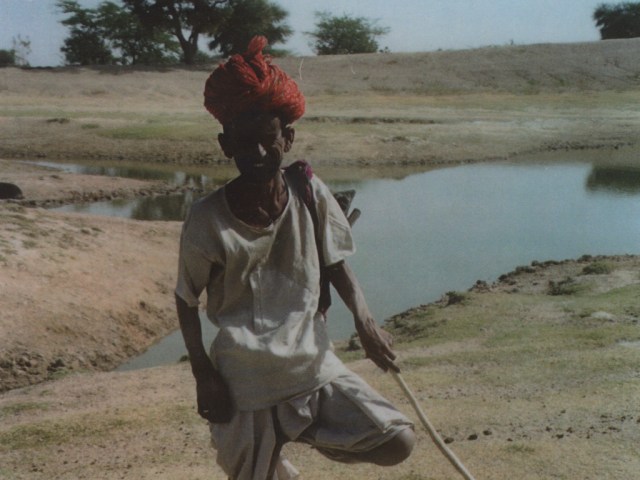
On the other hand, the countries with the most responsive ethnic groups are: China and India. The photo at the top is a cattle herder in one of the groups in India, the Bihari of Rajasthan.

From reports of the crypto-believers, three of the most responsive of these groups are: hidden Buddhist Christians in Japan, hidden Buddhists Christians in Viet Nam, and hidden house church members in North Korea. These three are all showing a growth rate of 65% per annum.

A related footnote is that the cost per baptism in one of the saturated countries is 700 times as much as a baptism in Nepal.

How do we respond to these different situations? To those countries saturated with resources, the first and foremost response ought to be prayer and listening. How does God renew and convert in well-tilled soil?

One response to these under-resourced may be to shovel resources in their direction, but that step needs restraint and caution. Such transactions are fraught with many pitfalls. The response for us outside should again be listening and prayer. What are their true needs for God’s harvest to continue?

Solomon gives us the closing word, from his prayer at the dedication of the Temple:

When a foreigner, who is not of your people Israel, comes from a distant land because of your name–for they shall hear of your great name, your mighty hand, and your outstretched arm–when a foreigner comes and prays toward this house, then hear in heaven your dwelling place, and do according to all that the foreigner calls to you, so that all the peoples of the earth may know your name and fear you, as do your people Israel, and so that they may know that your name has been invoked on this house that I have built. (I Kings 8:41-43)


Photo: Cattle herder in Rajasthan, India, patiently watching his cows
Posted in Gentile nations | Leave a comment

Martyrs and the Glory of God

May 22, 2016   Trinity Sunday   Romans 5:1-5

OK, if you really want to address the deeper enigmas of the Holy Trinity, I recommend Augustine’s treatise on the subject. My abridged version goes for over 200 pages, with only half of the chapters. I’m pretty sure nothing is omitted that you would want to cover.But the congregations might find it just a bit more gripping to hear about the comfort, hope, and histories of some who have lived by this faith.

True, the passage from Romans was not written with this in mind. I know that. These five verses, however, do trace the comfort and the hope of those who hold to this faith in the face of opposition. (Where else would “our suffering” come from but from opposition?)

Isolating these verses in the context of Trinity Sunday points to the journey of the faithful, the expectation of seeing the glory of the Godhead, the ascent to the beatific vision. It’s all there—a secure position with God, standing in His presence, joy at the sight of His glory.  Then come the realities of the journey—sufferings, endurance, tested character, and especially hope. This is the true hope, the hope that does not see its destiny but which knows the end of the journey, “the hope of the glory of God.”

How can we rejoice in suffering? The King James is even more harrowing: “We glory in tribulation.” If we can, then we find perseverance, or patience, to hold on. The “character” is really the result of testing, a trial that proves the faith. Paul supports the hope as being reliable because, though the substance is of things not seen, the love of God in the heart of the believer is the assurance of the completion of the journey.

Yes, we could position all this in the eschatological timeframe, the time after the return of the Lord and the establishing of His eternal kingdom. We can, but that leaves us out of the story. Our story, after all, is still being written. We live in the time of “our sufferings” and the testing of our faith meets us daily. The comfort comes by pondering the histories of those who have gone through the testing and found the faithfulness of the Lord beside and before them.

Who tells these stories better than martyrs?  They are the ones who have journeyed to the glory of the Godhead. They have suffered and they have persevered. They have been tested and did not lose hope. From their place in the cloud of witnesses in God’s kingdom they give us confidence as we journey and a glimpse of the glory of the Triune God.

MARTYRS AND FAITH IN THE TRINITY

Total numbers:
martyrs since AD 33: 69,420,000
Average per year:       160,000 or 0.8% of all Christians

Persecutors:
By the state:               55,871,000
By Muslims:                9,121,000
By other Christians:    5,538,000
In the 20th century:      45,400,000

By major confession:
Orthodox martyrs:      42,798,000
Catholic martyrs:        12,210,000
Anglican martyrs:       1,046,000

Martyrs and the Trinity:
The Christian belief in the Triune Godhead is unique among the faiths of the world. More than mere differences, these are points of controversy. Sometimes the controversy arouses rage, violent rage.

Belief in the Trinity has brought persecution from three sources. First, the State has at times been so threatened by this creed that military force has tried to eliminate the believers. Second, other religions can find Trinitarian faith an odious denial of truth, a false religion that must be buried. Third, disagreements within branches of Christendom have raised such vehemence that the adversaries resort to warfare and murder.

One group of Christians, the Coptic Church, has faced persecution and experienced martyrdom from each of these three sources. Copts were originally Christians in Egypt and faced persecutions from Roman leaders. Later, with belief in the person of Jesus Christ that did not use the language of Chalcedon, the Melkite Christians attacked them. Then facing the Islamic conquests, martyrdom at their hands continued until the recent deaths by ISIS.

Here are the three sources of persecution of the Coptic Christians and their major dates of martyrdom:

By the state, Rome:
200      10,000 deaths, martyrdom of Basilides
305      700,000 Coptics killed, 50% as martyrs. 311 – Patriarch Peter 1, Ieromartyros (“Seal of Martyrs”)

By Christians
338      Arian massacre of Copts and clergy in Alexandria, 500 martyrs
451      After Council of Chaldedon, Coptic churches closed, leading bishop killed, 500 martyrs
631      Melkite Christians persecute Copts for 10 years, killing hermits and ascetics. 20,000 martyrs

By Muslims
832      Caliph Mamun massacres 20,000, all churches demolished
1801    Turks kill continuous stream of Copts, 3,000 martyrs
1981    Muslim Brotherhood kills 1,000
1994    Countrywide violence burns churches, schools, businesses. 1,000 martyrs
2015    ISIS beheaded 21 Coptic Christians. The last words of some of those killed were “Lord Jesus Christ.”

A brother of two of the martyrs said, “Since the Roman era, Christians here have been martyred and have learned to handle everything that comes our way. This only makes us stronger in our faith because the Bible told us to love our enemies and bless those who curse us.” He prayed, “Dear God, please open their eyes to be saved and to quit their ignorance and the wrong teachings they were taught.”

Amen. Comfort, hope, histories, and the glory of God for all to see.


Photo: Indian staff of Christian school in Muslim Kashmir
Posted in Gentile nations | Leave a comment